スポーツ ベット テニス
スポーツ ベット テニス Monitoring Using Environmental DNA

Surveying the habitat of fireflies from 1 liter of water
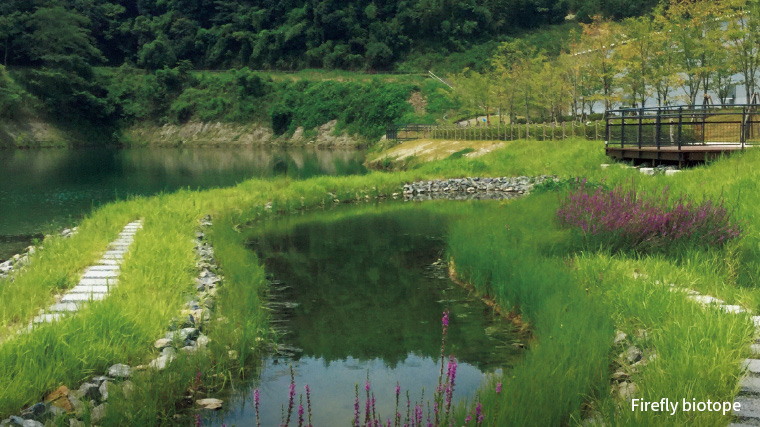
People have been familiar with fireflies since ancient times as living things that symbolize the richness of nature in woodland habitats. For this reason, much importance has been placed throughout Japan on the conservation of waterfront spaces where fireflies live, and at Kajima, we have been active in the conservation of スポーツ ベット テニス habitats and the construction of “スポーツ ベット テニス biotopes.” Fireflies spend their lives in a diverse environment—they live underwater in their larval stage, in soil as pupas, and in waterfront spaces in their adult stage. In particular, the larval stage spent underwater lasts approximately 40 weeks, which makes up most of their life cycle. Understanding the conditions present during this stage is therefore important. However, larvae are small at 0.5–2.5 cm, which makes it easy for them to hide in the gaps between rocks, in grass roots, etc. making them difficult to find.
The solution to this problem is “スポーツ ベット テニス monitoring technology using environmental DNA.” Environmental DNA is DNA that is expelled by organisms into their habitat. Analyzing this DNA makes it possible to estimate the presence or absence of organisms and their biomass. This technology is being actively used in fish-related research in the field of ecology, and its application to monitoring has begun. On the other hand, the amount of DNA expelled into the environment by aquatic insects including fireflies is small and difficult to detect, so up to now, there have not been many studies in this area. Against this background, we developed a polymerase chain reaction (PCR) primer (DNA that acts as a mark for identifying スポーツ ベット テニス DNA) that can efficiently amplify only スポーツ ベット テニス DNA and developed a method for detecting スポーツ ベット テニス DNA with high sensitivity. On testing the detection of スポーツ ベット テニス DNA using the developed primer, we found that DNA originating in fireflies could be detected not only from the shed skin and excrement of larvae but also from breeding water differing in number of individuals, immersion time, etc. Then, on applying the technology to monitoring in スポーツ ベット テニス habitats based on these results, we obtained DNA detection results corresponding to スポーツ ベット テニス habitat conditions thereby verifying the effectiveness of the technology.
Going forward, we plan to accumulate more data by continuing to monitor habitats and to drive the evolution of this technology toward a technique that can perform analysis quickly with high sensitivity. We aim to develop technology that can contribute to the conservation of habitats in which organisms including fireflies can live comfortably.
Important Facts

スポーツ ベット テニス larvae that are difficult to collectスポーツ ベット テニス larvae are small making them hard to find in a monitoring survey.

Understand スポーツ ベット テニス habitat conditions using environmental DNAHabitat conditions can be understood from the larval stage, the longest period in the life cycle of a スポーツ ベット テニス.
Introduction Videos
Landfill Site Ecore Kumamoto(Japanese Version)
スポーツ ベット テニス biotope to protect and nurture the local ecosystem
スポーツ ベット テニス biotope(Japanese Version)
Restoration of woodland environments through スポーツ ベット テニス biotopes
Expected Application Fields
- Final disposal site
- Dam/Tunnel
- Resort development